
The ‘don’t blame me’ blurb: I am not a financial advisor, portfolio manager, or accountant. This is not tax or investment advice; it’s educational information to get you going. Please consult your trusty professional and do your due diligence. Carry-on!
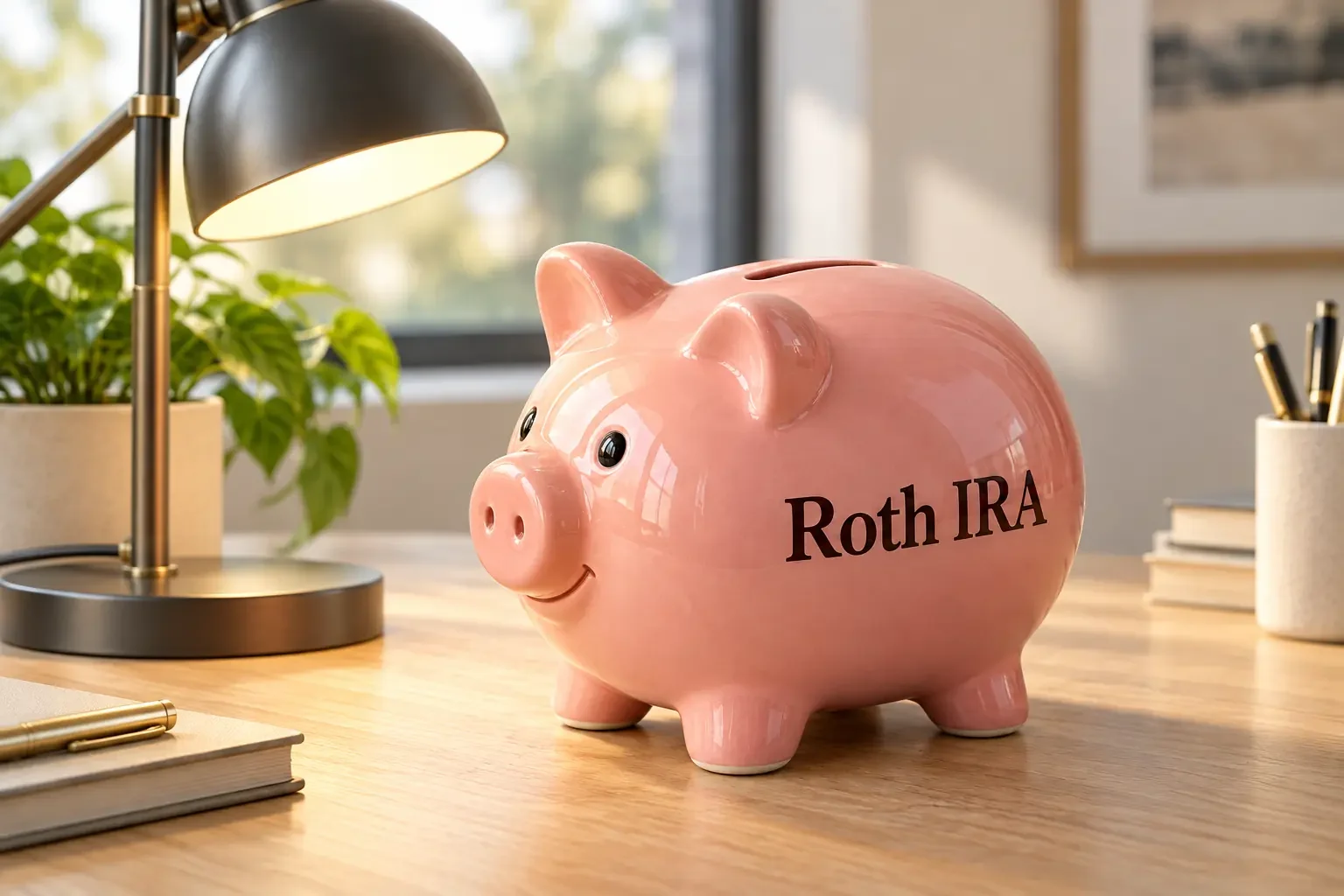
With simple set-and-forget investing, it’s easy to have around $1 million in retirement.
Updated: November, 2026
TL;DR
The Backdoor Roth IRA is great for freelancers paid as W-2 employees through a payroll company— which is common in industries like film production. (You can’t use W-2 income for our beloved Solo 401(k), so use the Roth IRA.)
If you earn over the Roth income cutoff, use the backdoor funding method, known as the Backdoor Roth IRA. Read on; it’s legal.
If you have a 401(k) (staffers) or a Solo 401(k) (freelancers), you can have a Roth IRA with its own separate contribution limit. Yes, you can have both!
SEP-IRA holders, it’s a bit messy to have both; consider consulting your accountant.
Funding deadline: April 15 of the following year. (For 2026, it would be April 15, 2027)
Backdoor funding method deadline: The deadline to fund the IRA and convert to a Roth IRA is December 31 of the year you are in.
What’s the goal here? Work less later in your career, with a growing pot of money, and enjoy chill-tirement.

The Roth IRA: Have $1 million by age 60.
How did the account get to $1 million?
Investing $625 per month, ages 25 to 49. ($7,500 per year contribution limit up to age 49.)
Investing $716 per month, ages 50 to 60. ($8,600 per year contribution limit age 50+.)
The account grows at an average of 7% per year using a Vanguard Mutual Fund or three ETFs. More on that below.
Why didn’t you know about this? It’s not your fault. No one educates us on investing. Not our schools, universities, unions, and often not our parents.
Try the compound interest calculator at the bottom of the page; play around with it. It’s kind of shocking how compound interest works. Our brains work in a very linear way; we don’t get it until we see compound interest in action.

Compound interest, watch that sucker grow!
What exactly is a Roth IRA (Individual Retirement Arrangement)?
A Roth IRA is a tax-advantaged retirement savings account that allows you to invest and grow your money until you retire.
You contribute after-tax dollars (contributions are not tax deductions).
Your investments grow tax-free.
Withdrawals during retirement are tax-free, unlike a traditional pre-tax 401k or Solo 401(k), where you pay income tax on the withdrawals.
How much can you contribute in 2026? (The IRS raises the limits some years.)
Up to age 49: $7,500
Age 50+: $8,600
Who qualifies for a Roth IRA?
Single filers earning less than $150,000 (2026 limit).
Married, filing jointly, surviving spouses: less than $242,000 (2026 limit)
Married filing separately (if you lived with your spouse at any point during the year) less than $10,000
After these amounts, the contributions start to drop and then cut off, so switch to the backdoor funding method.
What if you earn too much? The Backdoor Roth IRA
If you earn more than the limits above, the Backdoor Roth IRA is the way. I know it sounds dodgy, but it is legal. How?
Open an IRA and a Roth IRA with Vanguard (Schwab, Fidelity, E*Trade all have IRA’s, but Vanguard’s funds are awesome and simple.)
Deposit $7,500/$8,600 into the IRA from your personal bank account, as the money used is after-tax, not from your biz account. Wait a few days for the money to clear.
Call Vanguard (or do it online) and have them transfer the full amount into the Roth IRA. (I do this every year.)
The Back Door Roth instructions are on the Vanguard site here.
You must file IRS Form 8606 so the IRS knows the money was not deductible. TurboTax or your account will do this. Just make sure to tell them about the Backdoor Roth IRA.
WARNING: You cannot have an existing IRA with funds in it. If you do, the conversion from a Traditional IRA to a Roth IRA becomes a mess, and you’ll get taxed because of the ‘pro-rata rule.’ Consider rolling IRA funds into a Solo 401(k) to avoid this issue. This is very much a ‘chat with the accountant’ moment.
Can you have an active 401(k) (staffers) or a Solo 401(k) and a Roth IRA?
YES! You can have both, and they have separate contribution limits. How sweet is that?

What investments go inside a Roth IRA?
One of the simplest ways is a Target Date Fund. You pick the approximate year you want to retire and buy that fund, then keep buying it until you retire. Want to retire in 2060? Pick the Target Retirement 2060. Vanguard then invests the money in low-fee index mutual funds that track U.S. and international indexes, plus bonds. They adjust the mix as you age.
What are the fees? They charge around 0.08%, that’s it for an index target date fund. Example: $100,000 invested would cost $80 in fees per year.
Want to get more involved? You could use a Three-Fund Portfolio of ETFs. Read about it here in The Knowledge Post.
Inside a Roth IRA, you can buy stocks like Apple, Ford, etc, but I don’t recommend it. Read about why.
That’s it; just keep putting in the maximum allowed contribution every year and watch it grow.

The stock market will drop sometimes, and so will your Roth IRA balance.
Watching your balance drop can be uncomfortable (yes, the ‘I just puked a little in my mouth a little’ feeling), but it’s okay. The U.S. stock market goes up 2/3 of the time and down 1/3 of the time; market declines are normal. Keep investing, even in the middle of a stock market crash when everyone is panicking. Why? The funds are on sale; the price has dropped. They will recover.
DO NOT sell when others are freaking out. The arrows in the graph below are the big crashes in 2008-09 and 2020. See how small they look over a twenty-four-year period? At the time, a crash is totally pukey. Long-term, no biggie.
Read The Knowledge article here about what the stock market really is. Don’t listen to the daily noise on CNBC or the colleague at the water cooler.

Market crashes 2000-2024. Keep Calm and keep investing.
When can you start withdrawing from a Roth IRA?
At age 59 1/2, you can withdraw from the IRA (as long as the funds have been in there for five years) and switch from saving to spending mode in retirement, or chill-tirement, as I like to think of it. Work less, play more.
At any time, you can withdraw your initial contributions without penalty. Say you have contributed $50k over the years, and the account has grown to $110k. You can pull the $50k back out at any time. Try to avoid this; it hurts your friend compound interest.
There are penalties if you withdraw any gains before age 59 1/2. It should be your last resort; chat with your accountant before you make any decisions.
How much do you need in retirement? Here is a quick post on the ‘4% Rule’. I recommend talking to a Certified Financial Planner if you are five years away from retirement. Use one that charges a one-off fee for a plan. Personally, I am going to avoid advisors who charge a yearly percentage of your investments.
NEXT STEPS — Don’t delay; it’s the TIME invested that matters most.
Chat with your accountant if you have one. Do your due diligence and read up on this; it won’t take long.
Visit the Vanguard Roth IRA page here and get going. Call them and chat. The staff is very helpful. However, they cannot give tax advice. Schwab, E*Trade, Fidelity, and others also have Roth IRAs.
Setting up the Roth IRA is super easy. Don’t stop contributing, no matter what the stock market does.
Remember to read about the HSA. If you qualify, you can contribute another $4,400 per year (single) or $8,750 (family) (2026 limit), get a tax deduction, and use the same investment strategy.
I do not make anything when you open these accounts. Comment below if you open an account, so I know this article is working! We will get rich slow.
Ye olde wise saying:
“The best time to plant a tree was twenty years ago. The next best time is today.”
Play around with the compound interest calculator. What happens when you change the amounts or the term (the amount of time the money is invested for.) TIME is what matters.

Compound Interest Calculator
Watch your money grow. Play with the numbers and see the magic of compound interest. We will get rich, slow.
Your Results
| Year | Contributed | Interest | Balance |
|---|
💡 Use 7-8% as a conservative estimate for a Three-Fund Portfolio. 10% is the long-term S&P 500 average before inflation. The real magic happens after year 15 when compound interest really kicks in. Start now — future you will be grateful.









You're busy invoicing, not studying ETFs. A target-date fund is the one-fund retirement plan for freelancers: buy once, automate the deposits, and let time do the heavy lifting.