
The Silver Lining If You’ve Had a Tough Financial Year — Roth Conversions
The 'don't blame me' blurb: I am not a financial advisor, portfolio manager, or accountant. This is not tax or investment advice; it's information to get you going. Please consult your trusty professional and do your due diligence. Carry-on!
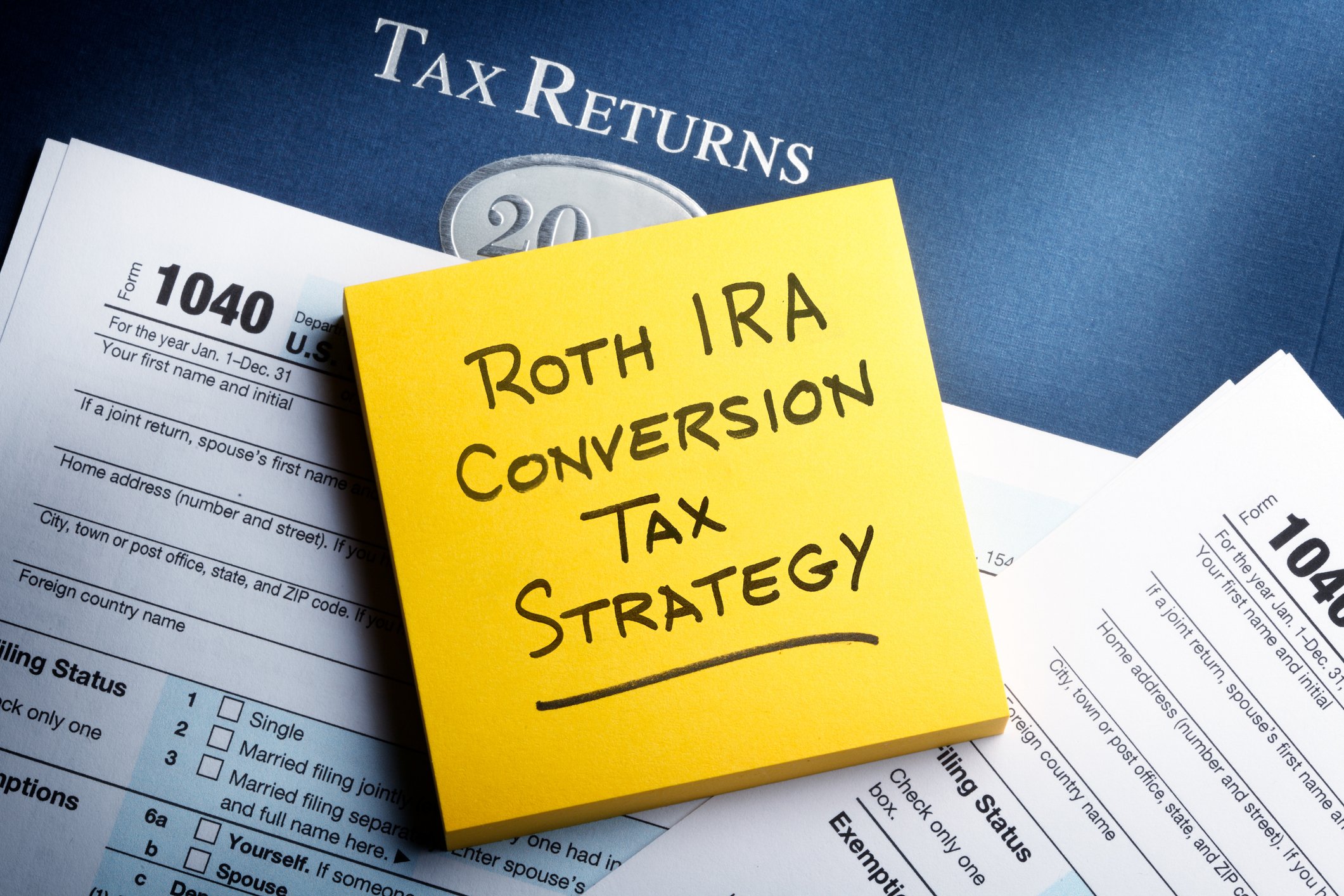
TL;DR
Roth conversions move money from your pre-tax traditional retirement accounts — Solo 401(k), 401(k), IRA or SEP-IRA into a Roth IRA. Withdrawals from these accounts in retirement are taxed as normal income.
With a Roth conversion, you pay income tax NOW on the converted amount at a potentially lower tax rate, then never pay tax on that money again.
You can move stocks, ETFs, mutual funds, and cash in a conversion.
Had a low-income year? Talk to your accountant or financial advisor about a Roth conversion to see if it makes sense for you.
This strategy can save you tens of thousands in lifetime taxes if you do it right.
Conversions must be initiated before December 31.
Did you have a terrible year financially? That painful low-income year might at least have a silver lining. If you had a bad year, your marginal tax rate will be lower than usual, so now might be a good time for a Roth conversion.
Until now, you've probably been doing the right thing in your high-earning, high-tax years by contributing to your Solo 401(k), SEP-IRA, traditional IRA, or plain staffer’s 401(k) and getting the tax deduction. With traditional accounts, you get a large tax deduction when you contribute, but upon withdrawals after age 59 1/2 (the IRS permitted age to begin using retirement fund income), they are treated as ordinary income, and you pay tax then. Note: there are two IRS rules, Rule 72(t) and The Rule of 55 that can allow earlier penalty-free withdrawls.
A Roth conversion moves money from a pre-tax retirement account into a Roth IRA that is tax-free when you make withdrawals after age 59 1/2. Read the post about the Roth IRA here.
The conversion is like paying the IRS its cut now at a discount, so you don’t get hit at a higher tax rate later when your income may be higher.
Your tax Brackets
Let's take a quick look at how income tax and tax brackets work. There is also a longer post on your tax rates here.
As you can see, you are taxed at different rates on different sections of your income. Think of it as a layer cake; the top slices of the cake get taxed at higher rates. Your top rate is called your marginal tax rate.
If you have had a low-income year, the top layer of the cake will be in a low bracket. This may be the time to do a Roth conversion.
Your future income may be higher = a higher tax rate
Using the example of a single filer, let’s say you earned a total of $40k after any deductions in a low-income year. That puts you in the 12% tax bracket. In retirement, you may be planning to pay yourself $80k a year, so your marginal tax rate would be 22%.
If you convert $8,475 now, staying inside the 12% bracket, you pay the 12% on the converted amount and never have to pay tax on that money again. That’s a 10% saving over the 22% rate that you would need to pay later.
Then there are RMDs
Required Minimum Distributions (RMDs) start at:
73 for people born 1951–1959
75 for people born 1960+
The government forces you to withdraw a percentage of your money from your pre-tax accounts, whether you need it or not. Why? The IRS doesn’t let pre-tax money compound forever without collecting income tax, whether from you or your heirs.
RMD withdrawals can push you into higher tax brackets, increase Medicare premiums (hello, IRMAA), and even make more of your Social Security taxable.
That's where Roth conversions come in; they are excluded from RMDs. They let you control when and how much you pay in taxes. Done right, it's like getting a discount on your future tax bill.
When to do a Roth Conversion
Over the years, you can convert as many times as you want. The IRS does not cap the number of Roth conversions. Useful times to look at a conversion:
Years with lower-than-usual income
Early retirement years before claiming Social Security
After a market crash. Stocks, ETFs, or Mutual Funds in your pre-tax 401(k), Solo 401(k), SEP-IRA drop in price. You then convert (move) them into a Roth. The market recovers (it always does), and they go back up in value. If your $10,000 in stocks drops to $6,000, you only pay tax on $6,000 when converting. When the market recovers to $10,000, all that growth and future growth is tax-free.
Before a tax law changes that increase rates — I know you don’t want to hear this, but the U.S. right now has historically low tax rates. With the U.S. government (both parties!) constantly spending more than they earn, federal debt is ballooning, and a reckoning is coming. That could mean higher tax rates.
Be aware:
Conversions increase your taxable income for the year, so be aware of possible effects on ACA health insurance subsidies or Medicare premiums.
Talk to an accountant or financial advisor.
This article is not supposed to be a guide to Roth conversions; it’s to alert you to their existence.
The Roth conversion is a strategic move that is a good idea in some years, for some people. If you think that may be you, chat to a pro. Your accountant can calculate exactly how much to convert to stay within your bracket.

** Thanks to fellow Director of Photography and reader Brad Serrano for pointing out that some of us have had a bad year, and an article on Roth conversions might be a good idea.






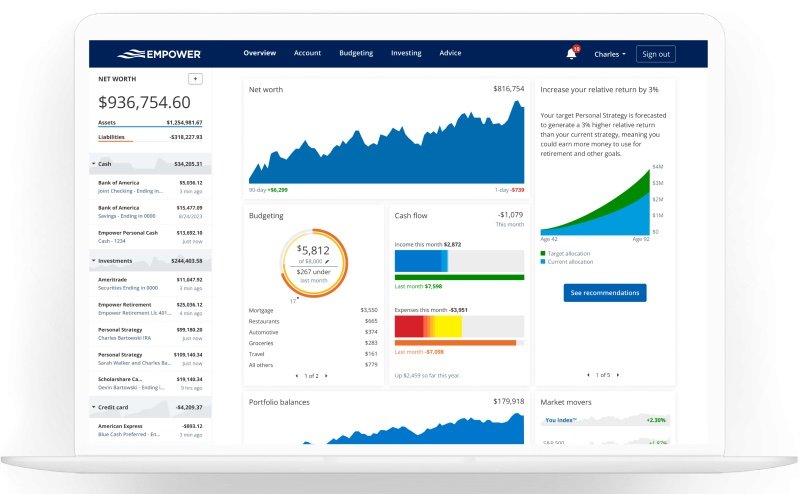


That 1% annual advisor fee doesn't sound like much. But on a $630,000 portfolio over 17 years, it quietly drains nearly $480,000 from your retirement — while the same money in a low-cost index fund does none of that. Here's what the financial industry would prefer you never actually calculate.