
The 2025 Market— The Headwinds, Performance and the ‘Vibecession’.
The 'don't blame me' blurb: I am not a financial advisor, portfolio manager, or accountant. This is not tax or investment advice; it's information to get you going. Please consult your trusty professional and do your due diligence. Carry-on!
TL;DR
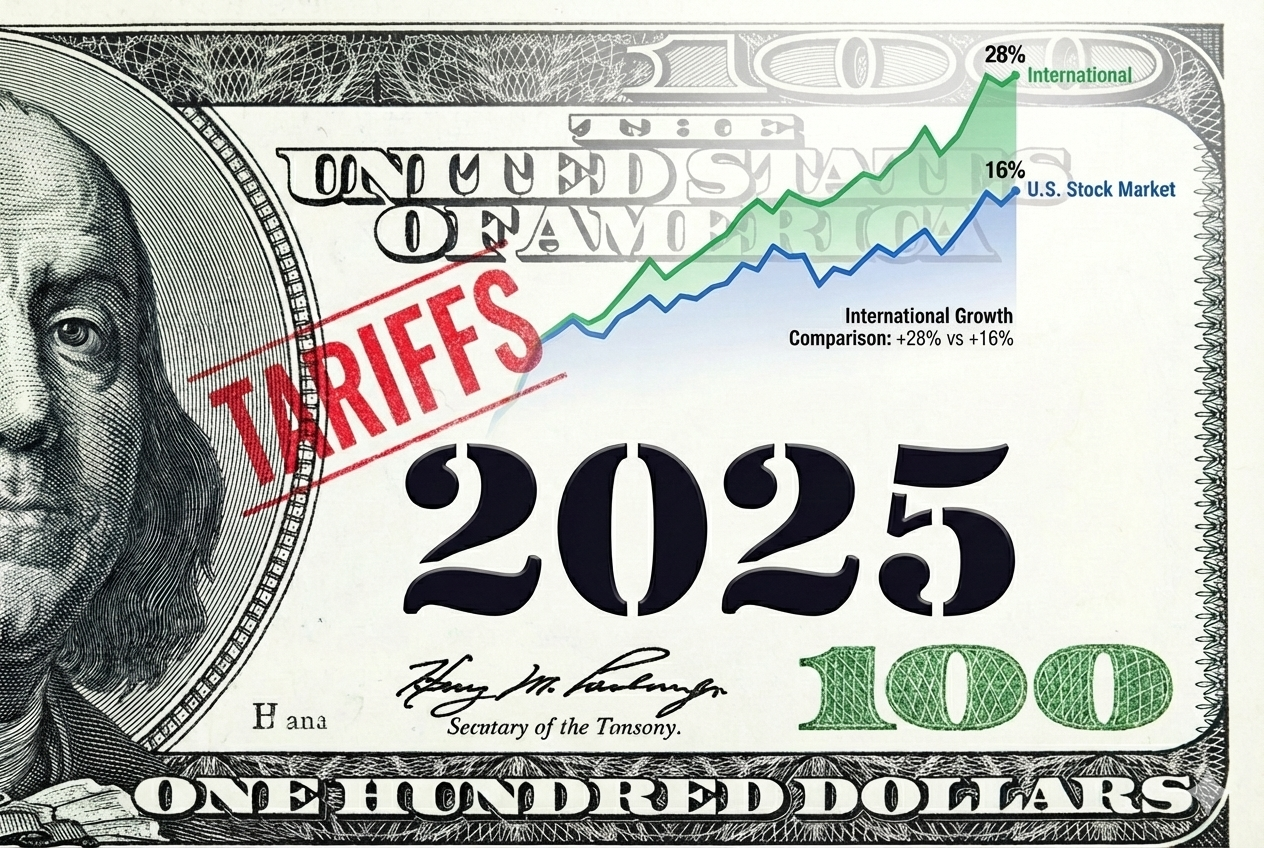
The broad U.S. stock market (VTI) finished up 16%, primarily thanks to the AI boom (or bubble?) inflating the Mag7 stocks.
However, International (VXUS) crushed 2025 with a 28% gain, reversing years of underperforming vs the U.S.
This is why we use a Three-Fund Portfolio or a Target Date Fund. Our eggs are in all the baskets.
Unemployment rose to 4.7%, and inflation won’t quite quit at 2.7%
The market in 2025 coped with some novel pressures.
The current administration’s whiplash-inducing tariff policy, the firing of the head of the Bureau of Labor Statistics over a report the President did not like, and the assault on the Federal Reserve's independence are among the issues that rattled markets, and frankly, they rattled me.
Unemployment rose from 4% in January to 4.6% in November. Inflation was 3% in January and has become sticky, staying around 2.7% by year's end. The Fed’s target is 2%.
So how did the markets do?
Shockingly well, actually. Our U.S. broad-market index ETFs (VTI or SCHB) were up 16% in 2025, a pretty impressive performance given the long-term average for the U.S. is around 10%.
That is, until you look at our International market ETFs (VXUS or SCHF). International crushed the U.S., rising 28%. Boo-Ya international! Let’s hit the sauna and put another weisswurst on the barbie!
| ETF | 2022 | 2023 | 2024 | 2025 |
|---|---|---|---|---|
| U.S. ETF: VTI |
-20.8% | 24.1% | 22.1% | 15.8% |
| International ETF: VXUS |
-18.5% | 11.7% | 1.8% | 27.8% |
This is precisely why our favoured Three-Fund Portfolio, or Target Date Fund, holds both U.S. and International index ETFs. Our portfolio is diversified regionally. The goal is not to aim for the best performance every year, but to have our eggs in multiple baskets and consistently achieve a good result with less risk. Achieving an annualized gain of 7-9% is our target. Compound interest will make us rich.
The U.S. (in red) vs International in 2025.
Much of the U.S. market gains have come from the Mag7, which now accounts for around 34% of VTI’s value (VTI and most indexes like the S&P 500 are capitalization-weighted — the higher a company's value, the more it makes up the index). For example, Nvidia is 6.22% of VTI, and Nike (NKE) is only 0.12%
The updraft in the U.S. market was the AI boom; many think it’s a bubble. Only time will tell which one it will be. If the massive spend that the AI companies are undertaking does not produce the revenues they expect, the shockwave will mean the market could plummet, likely leading to a 10-30% decline. That could be tomorrow, next year, or never. Welcome to the age-old ‘no one knows’ question: which way will the market go, and when?
What would the U.S. market have looked like with a little less boom-boom?
If we look at the Investco S&P 500 Equal Weight ETF (RSP), where each company is an equal part of the ETF at 0.22%, and is not cap. weighted, the U.S. market only rose 10.75%
VOO (S&P500) in blue, vs RSP equal weight in red.
But how did the year feel for those at street level?
Not so great. The vibecession continued, where the economy statistically is doing ok, but people’s sentiment (how they feel) is in the toilet. Some industries like my own, film and television production, are doing terribly. Meanwhile, the 1% are making bank; most of their income is derived from assets, not labour. With the market climbing and real estate doing ok, their wealth is growing.
This is why we invest. Investing in assets makes you rich, not us toiling away and earning only through labour.
While rich asset owners have plowed money into homes, cars and more, analysts warn stress among lower- and middle-income Americans could destabilize the economy. — Wall Street Journal, Dec. 30, 2025
So why is the market up if many people feel bad about their economic lives? “The stock market is not the economy.” It’s the phrase popularized by Kai Ryssdal of NPR’s ‘Marketplace’. The market is forward-looking and not always driven by current economic conditions. Right now, the market is seeing big dollar signs for the future of AI and Mag7 companies.
AI will shape and reshape employment in the years to come. Some will gain from AI, and others will lose their jobs. Economist Justin Wolfers put it best, saying, “AI is an ownership problem.” He points out that if you are the one using the AI, then you have a new advantage. If your boss owns and starts using AI, you may lose your job.
Wolfers discusses it and other subjects with Prof G and Ed Elson on one of my favourite podcasts, Prof G. Markets. These guys are smart, insightful, amusing, and also not afraid to call ‘bullshit’ on Wall Street.
What could possibly go wrong in 2026?
Usually it’s something that no one sees coming, a ‘black swan event’. The 2008-09 Sub-Prime and COVID crashes are good examples. Make no mistake that the last three years have seen above-average returns in the U.S. market. VTI gained 24%, 22%, and 16%. An incredible run vs VTI’s 9.2% annualized gain since the ETF began in 2001.
If and when the market crashes, ignore the feeling you want to puke in your mouth a little, and keep investing every quarter. If we have a 20-30% crash, consider dumping any extra cash into your portfolio.
If you’re 3-5 years away from retiring or slowing down, consider seeing a CFP for an investment/spending plan.
Here is to all of us freelancers, self-employed, and solopreneurs having a decent 2026!







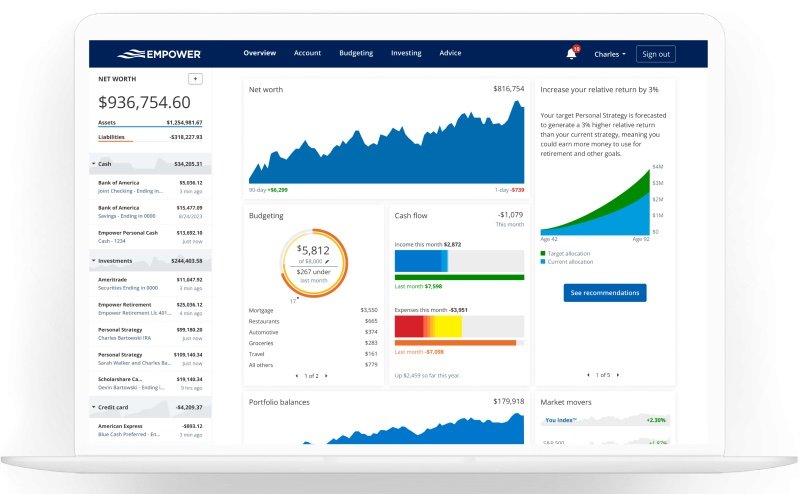


That 1% annual advisor fee doesn't sound like much. But on a $630,000 portfolio over 17 years, it quietly drains nearly $480,000 from your retirement — while the same money in a low-cost index fund does none of that. Here's what the financial industry would prefer you never actually calculate.