
The Supreme Court Killed Trump's Tariffs — Here's How Freelancers Can Get Their Money Back
The ‘don’t blame me’ blurb: I am not a financial advisor, portfolio manager, or accountant. This is not tax or investment advice; it’s information to get you going. Please consult your trusty professional and do your due diligence. Carry-on!


Yes, you, the importer, paid the tariff, and it was unlawful.
Image: Ian Taylor
TL;DR
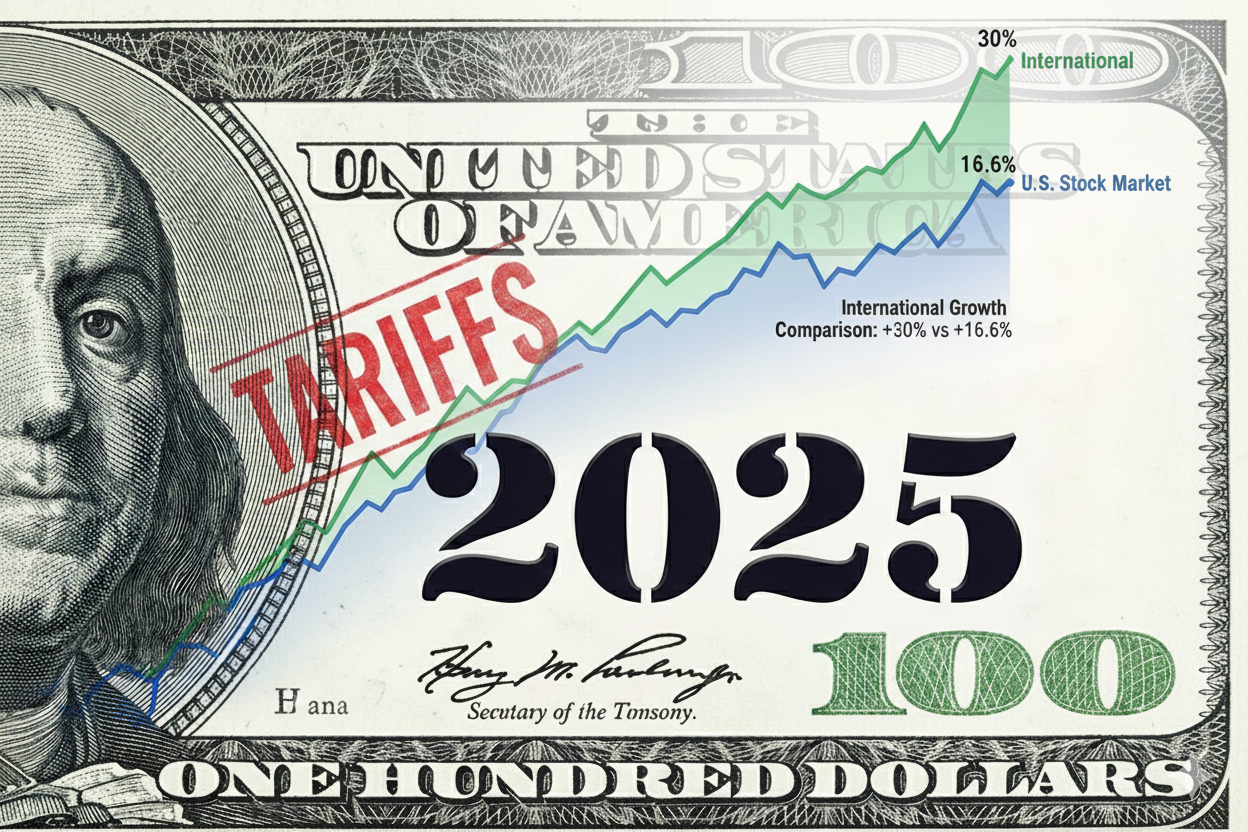
The Supreme Court deemed the Trump administration's IEEPA tariffs unlawful; now they owe everyone a refund.
If you were hit by these tariff import duties, see the links below to apply for a refund.
The bad news? For most of us solo operators, CBP has not gotten around to the minions; it’s dealing with big-boy refunds. But stay tuned and stay on this.
Besides geeking out on investing and retirement for freelancers, I’m a Director of Photography. I had ordered a fancy new Lit Duo light/color meter on Kickstarter from Sweden for $680 (€580). By the time it shipped, the Trump tariffs were in place, and I got slapped with a $101.55 import tariff and a $15 UPS processing fee.
It really pissed me off.
By now I think we’ve all dispelled the lie that Americans won’t be paying the tariffs. Yes, we do. A tariff is a tax that U.S. Customs and Border Protection (CBP) charges the importer (that’s you and me, or a U.S. business) when the goods enter the U.S. In general, Congress sets the tariff rates.
Lie is a strong word; I know. Saying something over and over when you know it’s not true? That’s a lie.
What happened
On February 20, 2026, the Supreme Court ruled 6–3 that the International Emergency Economic Powers Act gives no president the power to impose tariffs. Congress levies taxes — not El Presidentè; that's the opinion in one sentence.
CBP stopped collecting four days later. By then, roughly $166 billion had been taken across 53 million entries.
What you actually get back
Only the IEEPA layer that was enacted by the Trump administration. Ordinary duty, if any was due, and the carrier’s admin brokerage fees — they stand.
I should get the $101.55 back, but not the $15 UPS processing charge.
Why the shipper is holding your money
CBP refunds exactly one party: the importer of record. When FedEx or UPS cleared your parcel, fronted the duty, and billed you, they were most likely the importer on paper. The government pays them; they pay you. All three majors have committed to passing it through.
When can you apply to get the moolah back?
Unfortunately, for many of us, not now. CBP is processing Phase 1 and 2, which are based on the type and status of the customs entry. So far, $106.6 billion of refunds have been sent out.
Yes, that’s billion with a capital B. To put that in perspective, it’s enough money to buy 261,000 median-priced ($406k) homes in the United States.
Dudes who purchased Swedish color meters haven’t been included yet. When I enter my tracking number, the UPS site says: ‘Future Phase’.
UPS: “CBP has confirmed that additional phases will be released over time, but it has not published detailed eligibility criteria, sequencing, or timing for those future phases.”
Most of us are likely to be in Phase 3, which is coming at some point.
FedEx
Portal: https://ieepa-refunds.fedex.com/
Enter your tracking number. The portal shows whether FedEx has received a refund from CBP for that shipment and the amount, including interest. Where the money has landed, submit your payment details there, and FedEx pays you out.
FedEx has around $800 million earmarked for customers and started disbursing in mid-August. Do this one first.
UPS
Portal: https://www.ups.com/us/en/shipping/international-shipping/tariffs/tariff-refunds
Search by tracking number or delivery address — or log in with your UPS ID and pull every eligible shipment at once.
UPS has already filed as the importer of record and says there's no need to contact them; refunds return to the payer automatically. Two catches: any past-due balance gets paid first, and the money runs 60–90 days from CBP to UPS, then another 60–90 to you.
DHL
Information page: https://www.dhl.com/global-en/microsites-2-0/core/us-tariffs.html
No portal, no form. DHL files automatically and returns the money to whoever paid the duty. Watch the card you used.
USPS — the bad one
USPS is the awkward one. There isn't a FedEx-style consumer IEEPA refund portal for postal shipments, and USPS isn't the party responsible for refunding the customs duty. CBP handles the duty itself.
USPS is simply giving us the side-eye and telling customers to talk to CBP. Oh joy.
Stay tuned on this one.
If you were the importer of record yourself
If you or your business are listed as the Importer of Record, don't expect the carrier to automatically handle the refund. You file directly with CBP through the CAPE system in the ACE portal.
Two things before you start
Scammers are everywhere on this. CBP has warned about fake refund notices harvesting bank details. Nobody legitimate asks for your account number to "release" a refund. Type the URL yourself.
Tax note: If you paid the tariff personally and never deducted it, the refunded duty generally isn't taxable income. The interest paid with the refund is taxable interest income. If you deducted the tariff as a business expense in an earlier year, the refund may be taxable under the IRS's tax-benefit rules, generally to the extent that the deduction reduced your tax.
Wrapping up
The AP has reported that more than 80 lawsuits have been filed by customers against retailers, and more are in the works, so things may change; other refunds may become available.
I know you’re flat-out with the usual solo operator hustle, but I suggest not letting this one go. The federal government unlawfully charged you a fee; get that money back.
Then put it somewhere useful. Two hundred into the Solo 401(k) or a Roth IRA. Future You will look back and love Now You even more.























You're busy invoicing, not studying ETFs. A target-date fund is the one-fund retirement plan for freelancers: buy once, automate the deposits, and let time do the heavy lifting.