
Retirement: The Target Date Fund — It Doesn’t Need Your Attention. Ever.
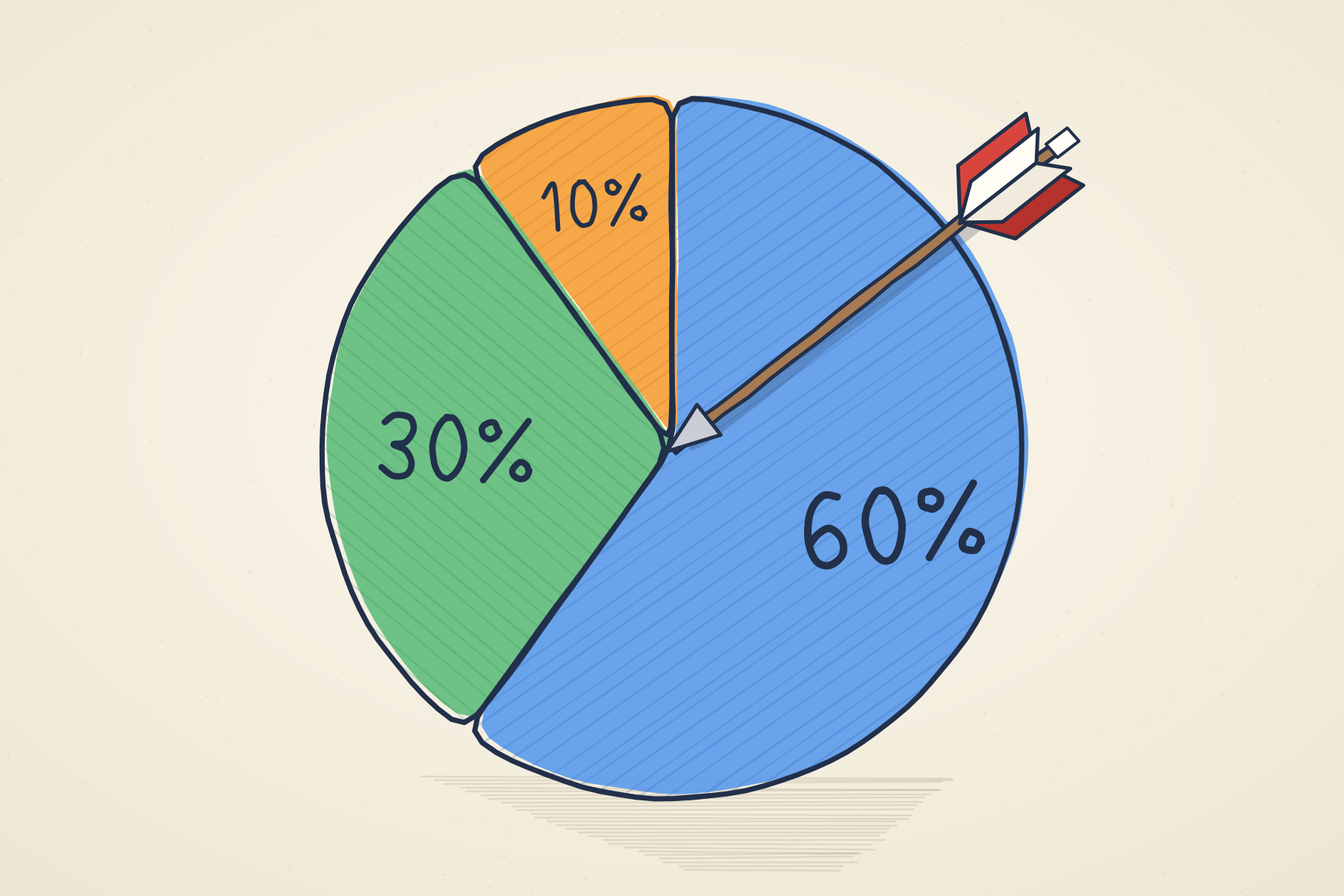
The target-date fund. Add money, it does the rest.
TL;DR
A fully automatic investment machine with almost zero fees. Just keep adding money, and it does the rest. It lives inside your Solo 401(k), SEP-IRA, Roth IRA, or HSA.
The fund invests in U.S. and International stocks, plus bonds, and adjusts the mix as you get closer to chilling. Think of it as a fund of a few funds on autopilot.
Grows over long periods at around 7%. Example: $1,500 a month for 30 years will get you around $1.8 million. (Real life: Start small; put in as much as you can.)
No, you do not need to pay a financial advisory firm for your whole life to become wealthy. Long-term investing can be very simple.
You’re drowning chasing invoices, answering emails, and calming down clients. You may not have the bandwidth to geek out on investing as I do.
Here is the good news. This is the one-fund retirement plan for freelancers who get that investing now will make them wealthy later, but don’t have the bandwidth to learn about investing with ETFs.
What a target-date fund is
A target-date fund is a single mutual fund (or the iShares ETF version) that holds a portfolio of thousands of stocks and bonds and manages it for you. You pick the fund with the year closest to your retirement, like “2055,” and that’s the whole decision. Set up a way to add money every month or quarter, and you’re done; move on.
But start now. Time is what will make you rich. Do not put this off; it will screw Future You.
Ease of use
You make one purchase, and the fund handles the rest. It rebalances itself and gradually shifts from stocks to bonds as your date approaches (this is called the “glide path”).
You buy the one fund inside your Solo 401(k), SEP IRA*, Roth IRA, and HSA (if you use it to invest, instead of medical expenses) and set up automatic monthly contributions. No tickers, no spreadsheets, no Sunday nights spent reading analyst opinions (which are usually worthless anyway).
The retirement account is the wrapper; the target date fund is the candy inside.
You’re probably with Schwab (like me), or Fidelity, E*Trade, or Vanguard. They all have them.
*SEP-IRA holders, consider switching to a Solo 401(k). The practical contribution limits are higher, and you can have a pre-tax and a Roth side by side.
Example time!
Maya is 35, a freelance editor, and plans to retire at 65. She puts $1,500 a month into a 2055 fund through her Solo 401(k). Over 30 years, she has contributed $540,000. At a 7% average annual return, that grows to roughly $1.83 million.
Yep. $1.83 million. If you stash away more after big jobs, you’re looking at $2 million+.
The trick is time. That 7% a year is called compound interest; think of it as gain on gain on gain. It starts snowballing over time. Have a play with the nifty calculator at the bottom of the article. Use the contribution amount and years and see what happens.

A 2055 target-date fund, year by year
Drag the slider to see how the fund changes for someone who chose 2055 as the retirement year.
Year 1 – 2026
Owner's age: 48.
Cheap, and why that matters vs paying a financial advisory firm for your whole life.
Target Date Funds are super cheap; they charge around 0.08 to 0.15%. Yep, for every $100,000 invested, it’s $80 - $115 per year. We want an index target date fund, not a managed one. Managed funds are more expensive and won’t make you any more money than an index fund.
Do that math versus what a financial advisor will charge annually.
Invest $1,500 a month for 30 years at 7% = $1.83 million.
Lose one percentage point to fees (6%) = $1.51 million.
You just lost $320,000 for doing nothing different.
Do we need financial advice sometimes? Absolutely. But consider paying for an advisor’s expertise at milestones when you need them, not a percentage or fee every year. Get married, have a kid, perhaps see them every 5 years, or if you’re in a blind panic because the market has crashed. (Crash hint: Keep buying; everything is on sale). But definitely see one 5 years out from retirement for a plan.
“My advisor can time the market and knows what to invest in to make me more money”. Nope. That’s just some advisor’s suggestive advertising.
88% of professional active fund managers on Wall Street do worse than an index fund after 15 years. S&P Global (the guys who created the S&P 500) has a long-running study here.
If a team of Wall Street suits can’t do it, your advisor can’t either. The advisor can give you a solid plan, provide a sensible investing and spending strategy, and help keep you calm.
This article covers the best way to get financial advice.
How and why the target date works
Diversification: One fund has multiple funds inside it that own thousands of companies, U.S. and international, plus bonds. If one company collapses, you’ll barely notice.
Risk: When you’re decades from retirement, the fund is mostly stocks, often around 90%. That means bigger swings, but you have time to recover. As retirement nears, it shifts toward bonds to cushion the ride. It is not risk-free; nothing is when it comes to investing.
Over 30 years, cash in the bank is the riskiest. Years of terrible stock market performance will still beat cash.
Hypothetical illustration. $1,000 deposited at the end of each month, returns compounded monthly, before taxes, fees and inflation. Cash rate set at the high end of the roughly 1.5–2% that top savings accounts averaged over the past 20 years. Real fund returns vary year to year and can be negative.
Want to be more aggressive? Pick a later year
You may have heard that target-date funds can be a little conservative in later years. To be more aggressive, choose a fund 5 to 10 years further out. If you retire in 2055, pick a 2060 or 2065 fund so it will hold more stocks for longer.
That brings more growth potential and deeper drops; this is called volatility. Do it only if you can watch your balance fall sharply and not touch it.
Who creates target date funds?
Buy the target date mutual fund from the broker you’re with (Schwab, Fidelity, etc.), or buy the iShares ETF. Be aware that the broker may charge a fee every time you buy a mutual fund that isn’t theirs. E*Trade does not charge for the Vanguard funds.
• Vanguard Target Retirement Funds — Vanguard does not have a Solo 401(k) account, only a Roth IRA. But you can buy their target date funds for free from an E*TRADE Solo 401(k).
• Fidelity Target Date Index Fund (make sure it’s the index version.)
• iShares LifePath Target Date ETFs (the ETF version, bought like a stock with any broker (Schwab, Fidelity, etc)
*FYI: I get zero moolah from these links. Nothing in this article pays me a referral fee. Yes, I lose money working on this site, but I enjoy helping freelancers and solo biz owners.
Don’t use a target date mutual fund in a taxable brokerage account, as it can create capital gains tax issues. You can use the iShares ETF version, as ETFs don’t have that issue. Or, use the classic Three-Fund Portfolio in a taxable account.
The bottom line
You don’t need to love investing. You need to pick a fund, automate the contributions, and ignore it. That’s the entire strategy.
Don’t delay. Every day you wait costs Future You money.
As a freelancer or single-person biz, if you haven’t already:
Open a Solo 401(k), (backdoor) Roth IRA, and HSA. Read the guides on the site. Future You will love Now You for doing it.
 FreelancerFinance
Compound Interest Calculator
Watch your money grow. Play with the numbers and see the magic of compound interest. We will get rich, slow.
Your Results
| Year | Contributed | Interest | Balance |
|---|
💡 Use 7-8% as a conservative estimate for a Three-Fund Portfolio. 10% is the long-term S&P 500 average before inflation. The real magic happens after year 15 when compound interest really kicks in. Start now — future you will be grateful.
The 'don't blame me' blurb: I am not a financial advisor, portfolio manager, or accountant. This is not tax or investment advice; it's information to get you going. Please consult your trusty professional and do your due diligence. Carry on!




















You're busy invoicing, not studying ETFs. A target-date fund is the one-fund retirement plan for freelancers: buy once, automate the deposits, and let time do the heavy lifting.